Written by Flowpro | Published on June 2025
Repiping a home in Auckland typically costs between $8,000 and $25,000, depending on your home’s size, the pipe material you choose, and how accessible your existing pipes are. If you’re dealing with discoloured water, frequent leaks, or ageing galvanised steel pipes, a full repipe may be the smartest long-term investment you can make.
This guide covers the key warning signs that you need repiping, the pipe materials available in New Zealand, cost breakdowns, timelines, and what to expect when you hire a licensed Auckland plumber for the job.
Recognise the Warning Signs That You Need Repiping
Most Auckland homes built before the 1980s were plumbed with galvanised steel or early copper pipes. These materials have a finite lifespan, and by now, many of them are well past it.
Here are the most common signs that repiping your home in Auckland is overdue:
- Rusty or brown water coming from your taps, especially after water has sat in the pipes overnight.
- Frequent leaks in multiple locations, rather than isolated incidents.
- Low water pressure throughout the house caused by internal pipe corrosion narrowing the flow.
- Visible corrosion or green staining on pipe fittings under sinks or in your roof space.
- Strange metallic taste in your drinking water, which can indicate pipe deterioration.
- Pipes older than 50 years that have never been replaced.
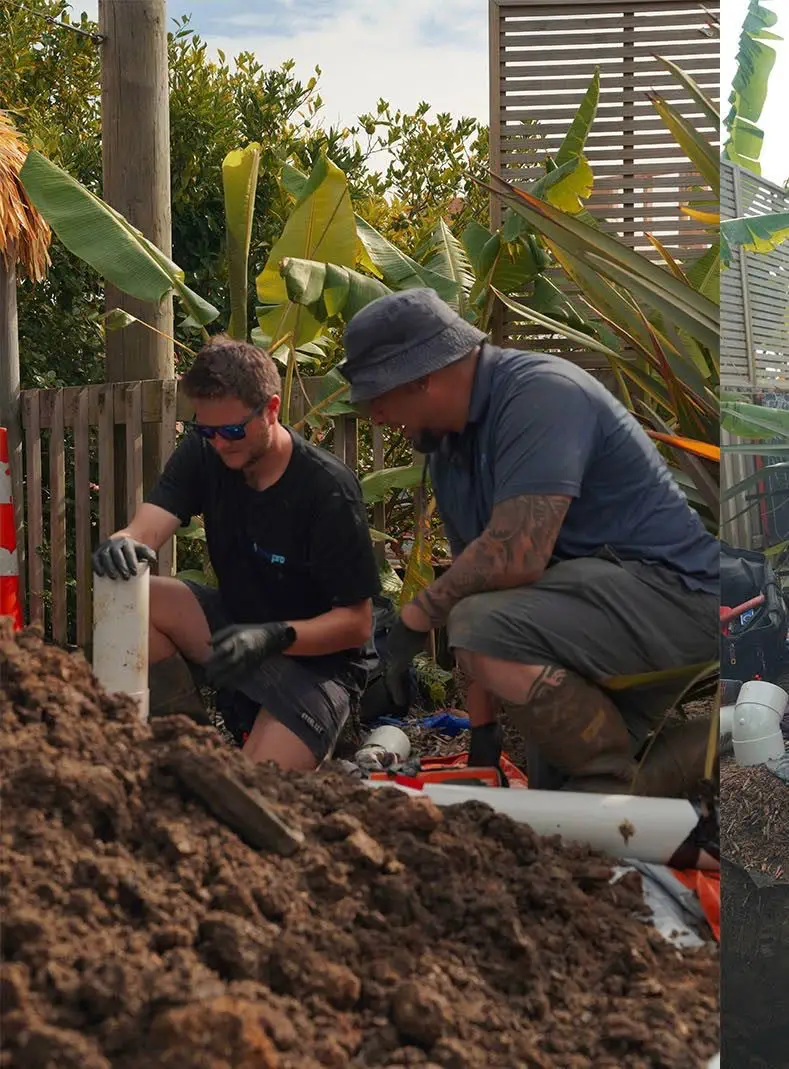
If you are seeing two or more of these signs, it is worth having a licensed plumber inspect your pipes before a small problem becomes a serious water damage event. Flowpro offers pipe inspections across the Auckland region, including Orewa and the Hibiscus Coast.
Compare Pipe Materials Used in Auckland Repiping Jobs
Choosing the right pipe material is one of the biggest decisions in any repiping project. Each option has trade-offs in cost, durability, and suitability for Auckland’s water supply.
| Material | Lifespan | Cost (Relative) | Best For |
|---|---|---|---|
| Copper | 50-70+ years | High | Long-term reliability, hot and cold lines |
| CPVC (Chlorinated PVC) | 50-75 years | Medium | Hot water lines, cost-effective alternative |
| PEX (Cross-linked Polyethylene) | 40-50 years | Low to Medium | Flexible runs, tight spaces, renovations |
| Galvanised Steel (existing) | 20-50 years | N/A (being replaced) | Older homes, now generally avoided |
| HDPE (High-Density Polyethylene) | 50-100 years | Medium to High | Main supply lines, underground runs |
PEX piping has become increasingly popular in Auckland repiping jobs over the last decade. It is flexible, resistant to freezing (useful in cooler Northland winters), and significantly faster to install than rigid copper.
Copper remains the gold standard for longevity and is widely preferred where budget allows. Your plumber will recommend the best option based on your home’s layout, existing infrastructure, and water quality in your area.
Understand Repiping Costs for Auckland Homes
The cost of repiping a home in Auckland varies quite a bit depending on several factors. Here is a realistic breakdown to help you budget accurately.
| Home Size | Estimated Cost (NZD) | Notes |
|---|---|---|
| Small home or unit (1-2 bedrooms) | $8,000 – $12,000 | Fewer fixtures, simpler layout |
| Medium home (3 bedrooms) | $12,000 – $18,000 | Most common Auckland repipe scenario |
| Large home (4+ bedrooms) | $18,000 – $25,000+ | Multi-bathroom, complex layouts |
| Multi-storey or complex access | Add $2,000 – $5,000 | Concrete slab, restricted roof space |
These figures include labour, materials, and basic wall/ceiling reinstatement. Full cosmetic repairs to walls or tiling are usually quoted separately.
Factors that push costs higher include concrete slab foundations (common in newer Auckland builds), complex multi-storey layouts, and homes with asbestos-containing materials in walls that require special handling.
Always get at least two or three quotes from licensed plumbers before committing. Flowpro provides free, no-obligation quotes for repiping jobs across greater Auckland.
Know What Auckland Building Regulations Require
Repiping is not a DIY job in New Zealand. Under the Plumbers, Gasfitters, and Drainlayers Act 2006, all plumbing work involving water supply pipes must be carried out by, or under the supervision of, a licensed plumber.
Here is what you need to know about compliance in Auckland:
- Building consent is required for most full repiping projects. Your plumber should handle this with Auckland Council on your behalf.
- A Certificate of Compliance (CoC) must be issued after the work is completed and inspected. This is essential documentation for your property file.
- All materials must meet the requirements of the New Zealand Building Code, specifically Clause G12 (water supplies).
- Watercare requirements apply to any connection changes that affect the Auckland water supply network.
- Heritage properties in areas like Ponsonby or Grey Lynn may have additional restrictions on how work is carried out.
A reputable Auckland plumber will manage the consent process for you. If a tradesperson tells you consent is not needed for a full repipe, treat that as a red flag.
Explore What Happens During a Repiping Job
Understanding the process helps you plan around the disruption. A typical residential repiping job in Auckland follows this sequence:
- Initial inspection and scoping. The plumber inspects your existing pipes, identifies problem areas, and determines the full scope of work.
- Quote and consent application. You receive a detailed quote and the plumber lodges a building consent application with Auckland Council if required.
- Water isolation and pipe removal. Your water supply is shut off and old pipes are removed. This is the most disruptive phase.
- New pipe installation. New pipes are run through walls, ceiling cavities, and subfloor spaces. Fixtures are reconnected as work progresses.
- Pressure testing. The new system is pressure tested to confirm there are no leaks before walls are closed up.
- Inspection and sign-off. A council inspector checks the work. Your plumber issues the Certificate of Compliance.
- Reinstatement. Walls and ceilings are patched. Full cosmetic finishing may be done by a separate tradesperson.
Most full repiping jobs on an average Auckland home take between three and seven working days. Larger or more complex homes can take up to two weeks.
You will need alternative water arrangements during the active plumbing phase. Your plumber should give you a clear daily schedule so you know when water will be available.
Identify How Auckland’s Climate and Water Supply Affect Your Pipes
Auckland’s environment plays a real role in how quickly pipes deteriorate and what materials perform best here.
Auckland sits in a humid, subtropical climate zone. This means pipe connections in roof spaces and under-floor areas are exposed to consistent moisture, which accelerates corrosion on older metal pipes. Homes in coastal areas like Orewa, Whangaparaoa, and the Eastern Bays also face salt air exposure that can degrade fittings faster than inland properties.
Watercare’s Auckland water supply is treated and generally low in hardness compared to some other New Zealand regions. This is actually good news for copper pipes, as softer water causes less scale buildup. However, certain older areas of Auckland’s network have experienced higher chloramine levels, which can be aggressive toward some pipe materials over time.
If your home is in a high-humidity zone or close to the coast, factor this into your material choice. Copper and HDPE tend to be more resilient in these conditions than standard CPVC.
FAQs on Repiping Home Auckland
How long does it take to repipe a house in Auckland?
Most Auckland homes take between three and seven working days to repipe fully. Larger homes, properties with concrete slab foundations, or multi-storey builds can take up to two weeks. Your plumber should provide a day-by-day timeline before work begins.
Do I need a building consent to repipe my Auckland home?
Yes, in most cases a building consent is required for a full repiping project under Auckland Council’s rules and the New Zealand Building Code. Your licensed plumber should handle the consent application on your behalf. Always ask about this before work starts.
Can I stay in my home while it is being repiped?
In many cases, yes. Plumbers will often work in sections so some water access is maintained each evening. However, during key stages like main line replacement, you may need to make alternative arrangements for part of the day. Discuss this with your plumber during the planning phase.
What is the difference between repiping and pipe relining?
Repiping involves physically removing old pipes and installing new ones throughout the home. Pipe relining is a trenchless method that installs a new liner inside existing pipes, often used for drainage rather than supply lines. Relining can be a good option for underground or hard-to-access drain pipes, but most supply line replacements in Auckland require full repiping.
How do I know if my Auckland home needs repiping or just repairs?
If leaks are isolated to one or two spots and your pipes are otherwise in reasonable condition, targeted repairs may be sufficient. However, if you have recurring leaks in multiple locations, consistently low pressure, or galvanised steel pipes older than 40 years, full repiping is usually more cost-effective than ongoing patch repairs.
Does home insurance cover repiping in New Zealand?
Standard home insurance policies in New Zealand generally do not cover the cost of repiping due to age or wear and tear. However, if a pipe failure causes sudden water damage to your home, that resulting damage is often covered. Check your specific policy and speak with your insurer before assuming coverage applies.
Wrap Up and Next Steps
Repiping your home in Auckland is a significant project, but it is one of the best investments you can make in your property’s long-term safety and value. Catching deteriorating pipes early prevents the far greater cost of water damage repairs down the track.
If you are seeing warning signs or your home has older galvanised pipes, do not wait for a failure to force your hand. Flowpro’s licensed plumbers serve homeowners across Auckland, from Orewa and the Hibiscus Coast to the wider Auckland region, and can provide a clear, honest assessment of your home’s plumbing.
Contact Flowpro today to schedule a pipe inspection or request a free repiping quote. Call us directly or fill in the quote form on our website and one of our team will be in touch quickly.